
Vaccines and health: what you need to know before traveling to Peru
Description
Traveling to Peru is an incredible experience, but it is important to take some health precautions before starting the trip. In this article you will find simple information about recommended vaccines, prevention of altitude sickness, care with food and water, and other useful tips to enjoy your trip with greater peace of mind.
We also explain what you should take into account depending on the areas you visit, such as Lima, Cusco, Machu Picchu, the Amazon region, and other regions of the country. Prepare in advance and travel informed to make the most of your adventure in Peru.
Complete guide
Traveling prepared is also part of the experience
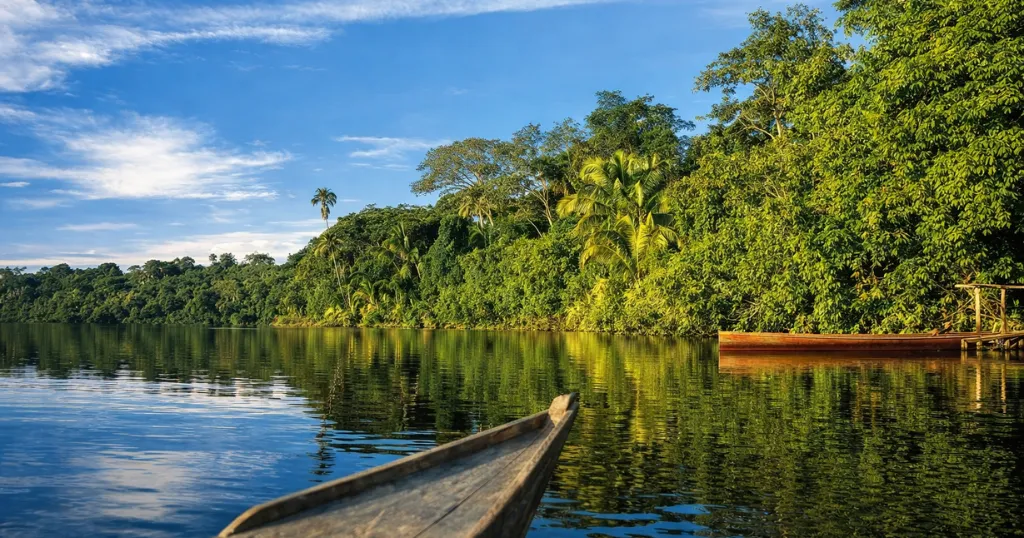
Peru allows you to combine coastal cities, high-altitude Andean destinations and tropical rainforest regions on the same trip. This diversity is precisely what makes there be no single list of vaccines or precautions valid for all visitors.
A traveler who will visit Lima, Cusco and Machu Picchu will not necessarily have the same recommendations as someone who will add Puerto Maldonado. Age, vaccination history, length of trip, activities, and certain health conditions also influence.
Will Peru require vaccinations to enter in 2026?
According to current CDC information for Peru, the yellow fever vaccine is not a general requirement for entry into the country. This does not mean that it is never advisable: the indication depends on the area to be visited.
The difference between a migratory requirement and a health recommendation should be clear. A vaccine may not be mandatory for entry, but at the same time it may be recommended for a specific area of the itinerary.
Yellow fever: the recommendation depends on the route
Yellow fever is transmitted by mosquitoes and the risk is concentrated in certain wooded and tropical areas. The CDC recommends the vaccine for travelers 9 months of age or older who are headed to risk areas below 2,300 meters in several regions of the country.
The Ministry of Health of Peru includes among the regions with at-risk areas the regions of Amazonas, Ayacucho, Huánuco, Junín, Loreto, Madre de Dios, Pasco, Puno, San Martín, Ucayali, and sectors of Cusco, and clarifies that the city of Cusco, Machu Picchu, and the Inca Trail are excluded from this consideration.
For the classic circuit
If the trip is limited to Lima, Cusco, the Inca Trail and Machu Picchu, the CDC does not recommend the yellow fever vaccine due to local risk in those destinations.
When the vaccine is indicated for a risk area, the Minsa recommends administering it at least 10 days before travel. One dose provides long-lasting protection; individual convenience should be evaluated when contraindications or special conditions exist.
Routine vaccinations: the starting point
Before seeking a specific vaccine for Peru, the traveler should check that their routine vaccination schedule is up to date. The CDC includes among the routine vaccines varicella, diphtheria-tetanus-pertussis, influenza, measles-mumps-rubella, polio, and herpes zoster according to age and situation.
In 2026, measles deserves special attention due to the increase in international cases. The CDC recommends that international travelers be properly vaccinated in accordance with the corresponding guidelines.
01 · HEPATITIS A
The CDC recommends the hepatitis A vaccine for unvaccinated travelers aged one year or older who are traveling to Peru. The recommendation is related to the risk of transmission through contaminated food or water.
02 · HEPATITIS B

It is also recommended to check for hepatitis B protection. The CDC recommends it for unvaccinated travelers under 60 years of age and notes that those over that age can also get vaccinated before traveling.
03 · TYPHOID FEVER
The typhoid vaccine is recommended by the CDC for most travelers, with special emphasis on those who will visit small towns, rural areas, or stay with family or friends.
Amazonia: the Prevention continues after getting vaccinated
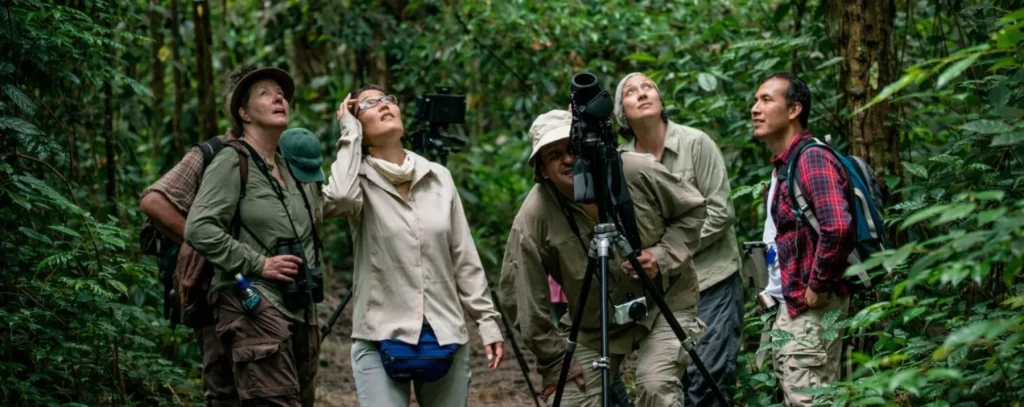
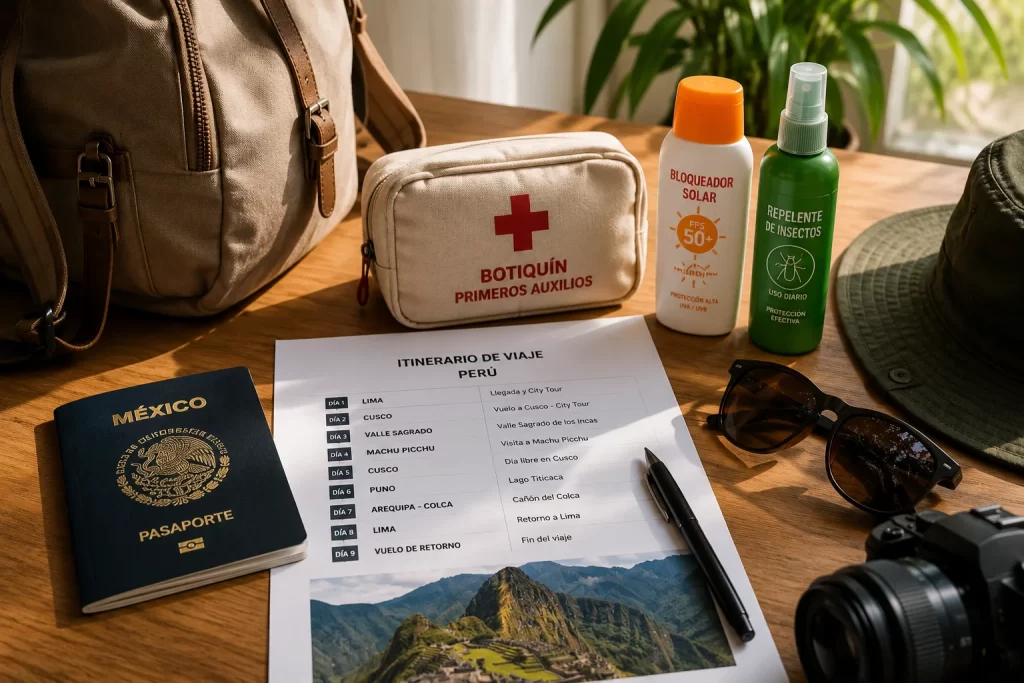
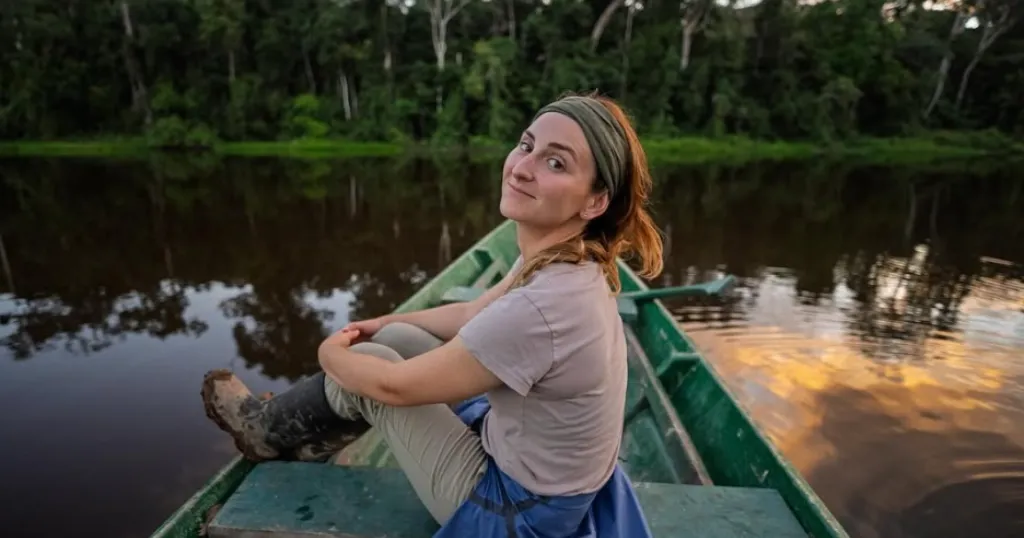
In the jungle, protection against mosquito bites is essential even for a person vaccinated against yellow fever. The Minsa recommends repellents, clothing that covers a large part of the body, and mosquito nets in high-risk areas.
In addition, there are mosquito-borne diseases for which a vaccine is not part of the tourist's usual prevention. Therefore, behavior during the trip remains important.
- Repellent
- Clothing that covers the skin
- Accommodation with protection/mosquito net
Malaria: not all regions of Peru have the same risk
The CDC identifies transmission of malaria in areas located below 2,500 meters east of the Andes, including Iquitos and Puerto Maldonado. For certain areas, it recommends consulting about preventive medications.
In contrast, the CDC indicates that there is no transmission of malaria in Lima, the cities of Arequipa, Ica, Moquegua, Nazca, Puno or Tacna, nor in the main high-altitude tourist areas such as Cusco, Machu Picchu and Lake Titicaca.
Therefore, if the itinerary includes jungle areas, the query should include specific names: region, locality, accommodation, number of nights and excursions. «Voy a Perú» does not provide sufficient precision to assess the prevention of malaria.
Food, water and hydration
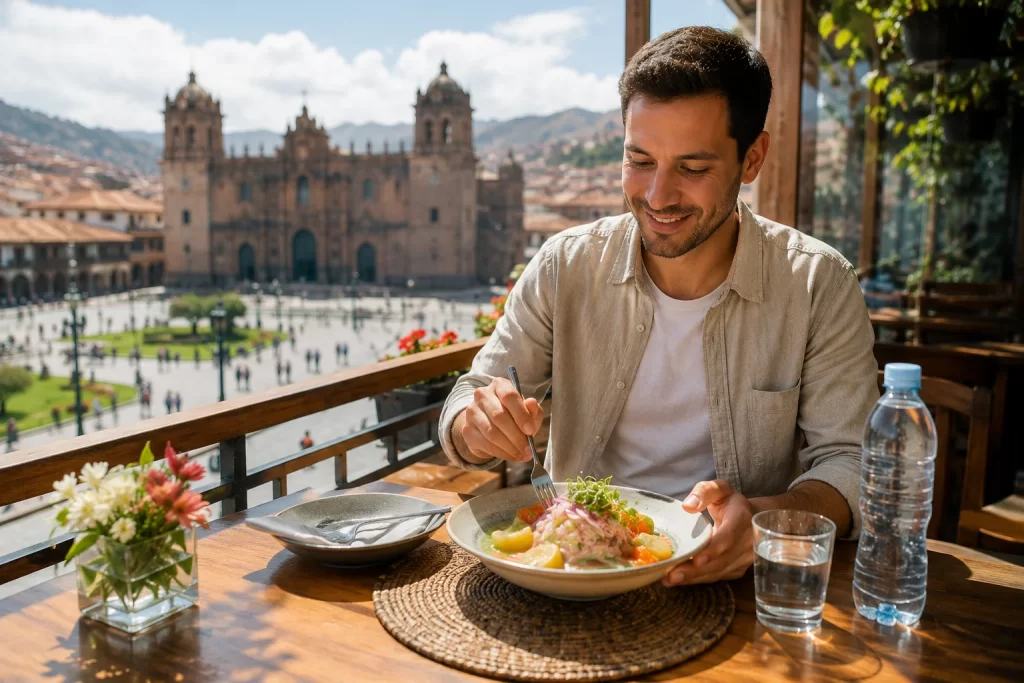
Gastronomy is an essential part of a trip to Peru. Prevention does not consist in avoiding it, but in choosing reliable establishments, consuming food that is prepared properly, and maintaining adequate hydration.
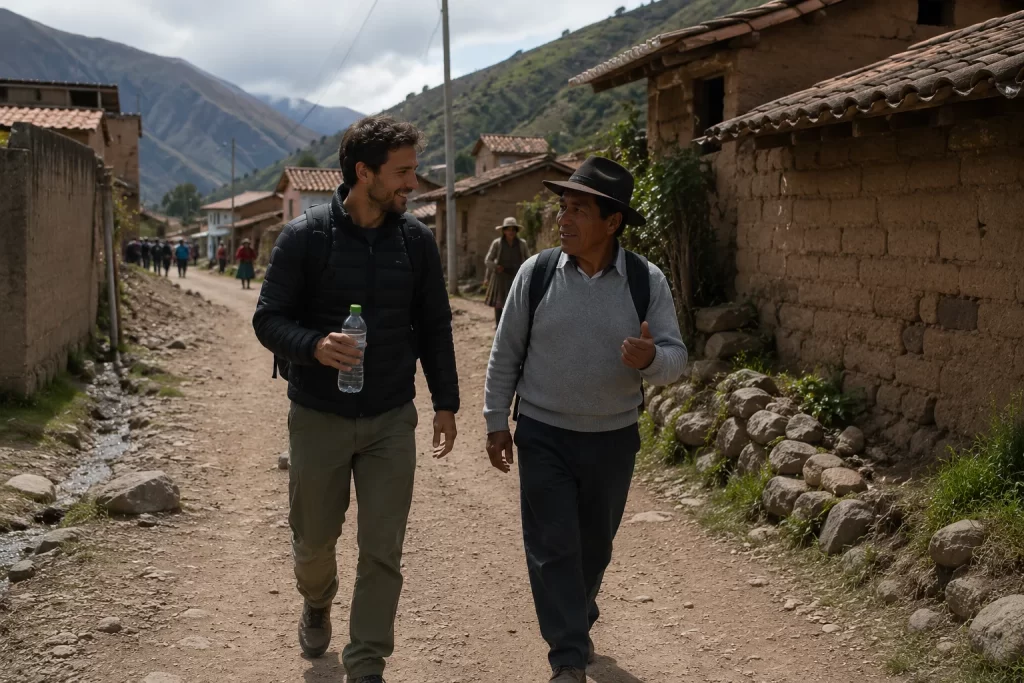
During long days, rural excursions or high-altitude days, having safe water and not having to wait until you feel thirsty helps maintain a more comfortable travel routine.
Sun protection and the weather
In the Andes, a cool temperature can coexist with intense sunlight. For outdoor activities, it is advisable to use broad-spectrum sunscreen, UV-protective lenses, a hat or cap, and appropriate clothing.
Sunscreen protection is especially important in Machu Picchu, the Sacred Valley, Lake Titicaca, and mountain hikes.
Travel first aid kit: prepared, not excessive
The first aid kit should meet the needs of the traveler. Minsa and Digemid recommend having basic supplies for minor injuries and appropriate medications. Those who use routine treatments should carry sufficient quantities and anticipate possible delays.
- Personal medication and related documentation.
- Basic material for small repairs.
- Repellent when the route includes tropical areas.
- Sunscreen and protective elements.
- Hand hygiene products.
- Specific elements indicated by the healthcare professional.
Caution
Do not use the first aid kit as a substitute for medical care or incorporate prescription medications based on informal recommendations.
When should the traveler’s health check-up be done?
The CDC recommends visiting a professional approximately one month before the trip to review vaccines and medications that may be needed. This allows for completing schedules, assessing for yellow fever or malaria based on the route, and reviewing personal conditions.
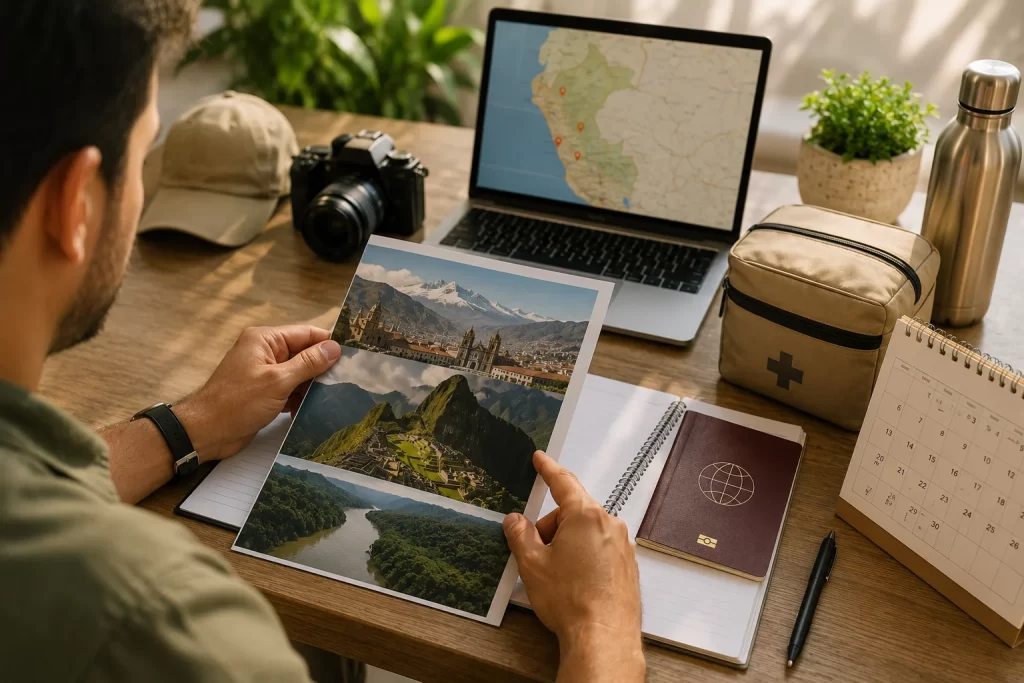
4–6 weeks before
- Close a preliminary version of the itinerary.
- Review routine vaccinations.
- Consult yellow fever if there will be jungle.
- Consult a doctor if you are visiting risk areas.
- Review conditions that may be affected by the height.
- Check the coverage of your travel insurance.
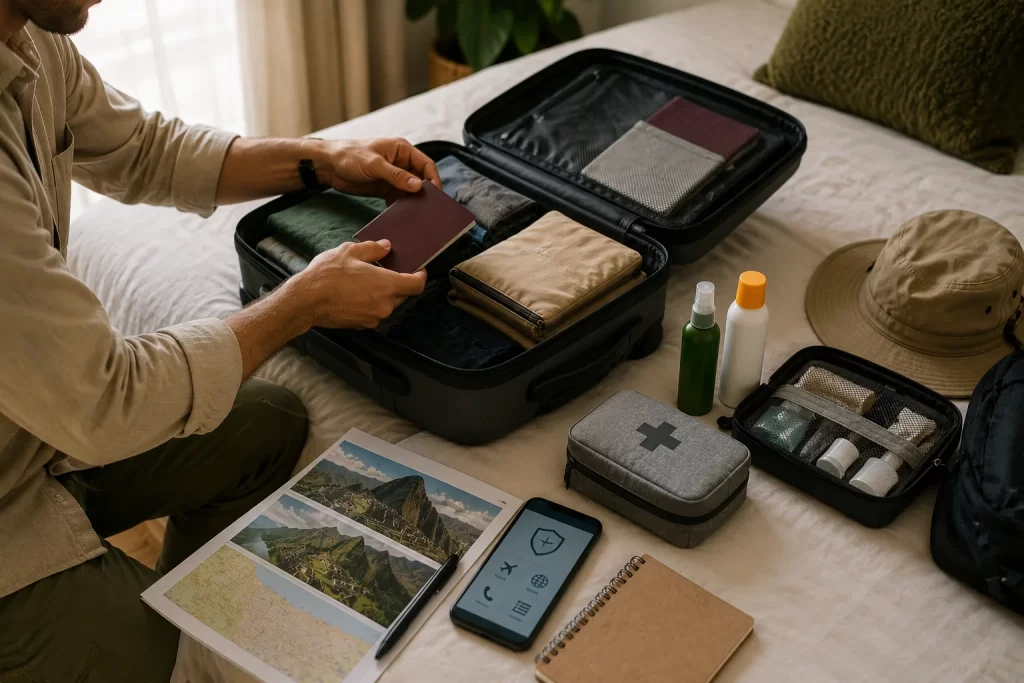
During the week before
- Prepare medication and documentation.
- Organize a first aid kit, insect repellent, and sunscreen.
- Recheck official health warnings or requirements.
- Store insurance data and assistance contacts.
So, what vaccines do I need to travel to Peru in 2026?
There is no single answer. For the classic circuit of Lima, Cusco and Machu Picchu, the yellow fever vaccine is not recommended by the CDC due to local risk in those destinations, but routine vaccinations and other recommendations such as hepatitis A, hepatitis B or typhoid fever should be reviewed according to the traveler's profile.
If the trip includes Amazonia, the assessment changes: yellow fever, malaria and prevention against mosquitoes become more important. The final recommendation should be individualized by a healthcare professional.
A well-organized trip doesn’t start with just a reservation. It starts with understanding the route, the weather, the altitude, and the precautions that allow you to enjoy each region with greater tranquility.
Health warning
This content is for informational and tourism planning purposes only. It does not replace a medical consultation or constitute an individual recommendation for vaccination or treatment. Recommendations may vary based on age, pregnancy, medical history, medications, country of origin, duration of travel, and specific destinations. Before getting vaccinated or using preventive medications, consult with a healthcare professional or a travel medicine service.
What our customers say
EXCELENTE

A base de 109 reseñas

Publicado en Tripadvisor 

Leni C
Verificada The best visit of my life
I am very satisfied with my trip to Machu Picchu with the Andean agency. I highly highlight their organization and their availability at all times, always attentive to any inquiry and mindful that everything goes well. The view of Machu Picchu is something that will not be erased from my mind; it is incredible. I recommend them totally; thank you very much for your work.
Publicado en Tripadvisor

Kathi C
Verificada I LOVED GOING WITH ANDEAN ✨👌🏻
I loved the experience; I saw the wonder in the best way, everything was safe, beautiful, and without complications. I would travel with Andean again without hesitation, because they supported me from the beginning and literally did everything for me so that I would enjoy it; I loved the experience to the fullest. I am very grateful for the lovely treatment and for looking after me at all times. I highly recommend them! 🥹✨
Publicado en Tripadvisor

Cruiser09205465266
Verificada Experience in Machu Picchu
It was a magical experience to visit Machu Picchu, we were enchanted by the wonder, the guide was very attentive and kind, he had patience and explained to us in detail about Machu Picchu. I liked the logistics and they were attentive to us
Publicado en Tripadvisor
Cruiser09205465266
Verificada Incredible days.
I went with my partner for my birthday, I had a very nice time, in the city and the places we visited everything was very incredible, I will definitely return to Cusco again.
Publicado en Tripadvisor

GEDY C
Verificada Good Experience!!
Excellent experience on the City Tour. Everything was very well organized, from the pickup to the tour of the main attractions. The guide was very kind, attentive, and explained each place clearly and interestingly. We enjoyed the tour a lot and saw incredible places in the city. Without a doubt, a highly recommended experience for those visiting Cusco. We would hire the service again!
Publicado en Tripadvisor

YOSELYN MILAGRO... C
Verificada Excellent experience discovering the history and culture of Cusco.
I did the Cusco City Tour with the Andean Peru Exploor agency and I had an excellent experience. The tour was very interesting, I was able to get to know the main historical and cultural attractions of Cusco, and enjoy its incredible landscapes. It was an excellent way to learn more about Inca history and culture. I recommend this experience to those who visit Cusco and want to discover its most emblematic places.
Publicado en Tripadvisor
GEDY C
Verificada An unforgettable experience at Machu Picchu
We had a very good experience on our private tour to Machu Picchu. From the beginning they were attentive to us and everything was well coordinated. The guide was very kind and explained a lot to us about the history of the place. Since it was private, we were able to go more calmly and enjoy the tour at our own pace. It was a very nice experience and we would definitely hire the service again. Recommended!
Publicado en Tripadvisor

CLARISA LOPEZ
Verificada Wonderful experience.
I had a wonderful experience with Andean Peru Exploor. The tour was very nice and allowed me to learn more about the history, culture, and most iconic places in Cusco. I want to especially highlight our guide Paul, who was very kind, attentive, and professional throughout the entire visit. His explanations made the experience even more interesting and special. I totally recommend this agency to those who want to get to know Cusco and enjoy an unforgettable tour. Many thanks to Paul and the whole team for this lovely experience!
Publicado en Tripadvisor
Marcos D
Verificada Incredible experience!
I would like to share a bit of my experience with the agency Andea Peru Exploor. Throughout the entire trip, the guides were always punctual, helpful, and very competent. The agency also gave us all the necessary support and always sent the information about the tours, transfers, schedules, and meals in advance, which made our trip much easier. I was really surprised by the organization and care of the entire team. Everything worked very well and we could enjoy the tours peacefully, without needing to worry about the details. Certainly, on a next trip to Peru, I would hire Andea Peru Exploor again. We had an excellent experience and highly recommend the agency!
Publicado en Tripadvisor

Cristiane F V
Verificada Choosing this agency made a total difference in our trip
I have booked my entire trip to Peru regarding transfers and tours - from airport transfers in Lima and Cusco to tours like City. Tour through Lima, Sacred Valley, and Machu Picchu. A lot of professionalism from everyone who assisted us. Starting with all the attention and tips from Yolanda who always replied to me on WhatsApp, going through the drivers and guides. Always punctual and respecting our rhythm. We did everything in transfers and private tours. Certainly, our choice of agency contributed a lot to this trip being marked in our lives. Thanks again.
Why?
traveling
with Andean Peru Exploor?
Because we don’t just organize tours… We create experiences that connect with the soul of the traveler.
Guarantee & Trust
A legally registered company in Mincetur, Gercetur and Sunat, guaranteeing trust and formality.
Without complications
Travel without complications: from your arrival, everything is coordinated — transfers, trains, tickets, food, and hotels according to category.
Different Packages
We have different packages that adapt to your needs and in small groups for your convenience.
Adapted Services
Services tailored to you: private or shared options, designed for different styles and budgets.
Assistance
Personalized service 24/7, 365 days a year.